

When customers grab a jacket off the shelf, most notice only the fit, color, or design. But behind every high-performing piece of outerwear is a testing approach that assures it can prevail in real-life circumstances. Retailers and distributors must understand these quality tests. After all, buyers expect jackets that not only look exemplary but also hold up against everyday wear, wind, or rain.
Here’s a closer look at the testing process that outerwear jackets undergo before they reach retailers.
Durability is the spine of any jacket. Manufacturers subject outerwear to tensile strength and abrasion testing to assess its resistance to tearing and fraying. High-friction areas such as elbows and cuffs often get extra attention.
Durability checks promise jackets can bear everything from outdoor adventures to a morning commute without falling apart.
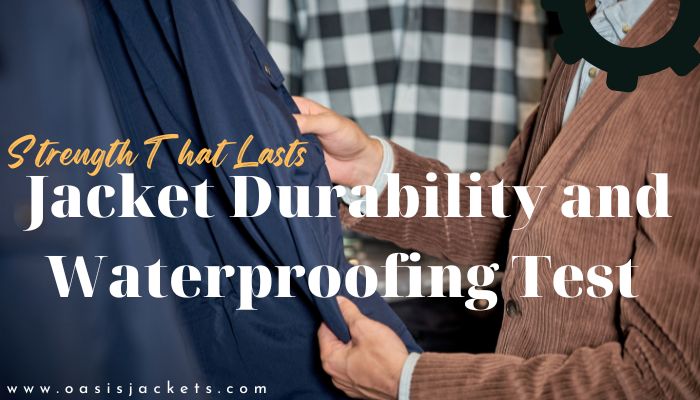
Nobody wants a jacket that soaks through at the first shower. That is why waterproof testing is not optional. To validate performance, jackets are tested in simulated rain chambers and under hydrostatic pressure.
These tests assist retailers who source outerwear by assuring that customers obtain jackets that can withstand variable weather conditions.
Insulation distinguishes a basic jacket from a winter-ready necessity. Thermal resistance testing is performed on jackets to see how much warmth they retain.
This blend of warmth and breathability allows stores to provide jackets that work effectively in all seasons and conditions.

After a few washes, a fashionable jacket loses its charm if the color fades. Colorfastness testing is therefore essential in the manufacturing of outerwear.
Retailers may be assured in supplying jackets with vibrant colors that hold up even after repeated use and washing.
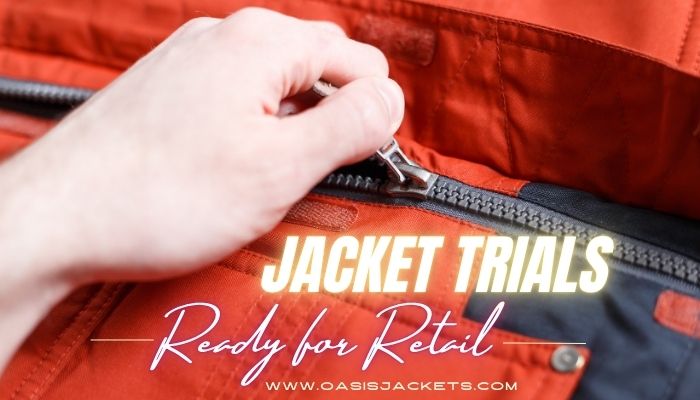
Zippers may look negligible, but they’re often a deal-breaker in jacket quality. A broken or stuck zipper can render even the finest design futile. That is why suppliers do specialized inspections.
Solid zipper testing guarantees that outerwear products are practical and customer-approved.
These stringent quality checks provide companies with a competitive edge and are more than simply technical details. Stocking jackets that pass these standards increases brand value over time, decreases returns, and wins over customers.
Reliable suppliers engage in jacket supplier quality control to ensure that standards are uniform across all bulk orders. This increases recurring business and protects shops from customer grievances.
Retailers and business owners can upgrade their collections by sourcing jackets from suppliers and manufacturers who follow strict quality control for performance, waterproofing, and durability.