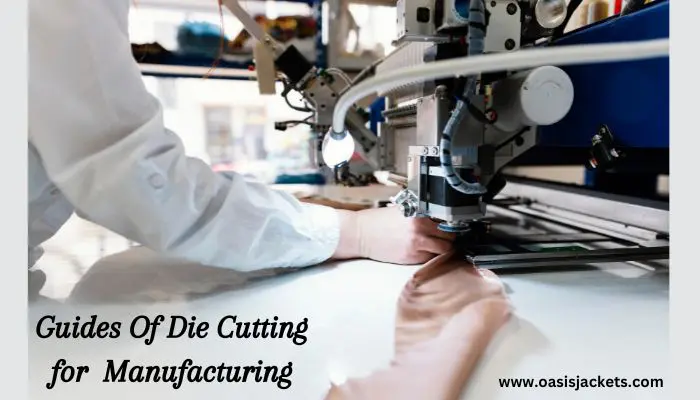


In clothing manufacturing, fabric cutting is the most crucial step. It is very different from general cutting. This particular term is only applicable to apparel manufacturing and the quality of the product depends a lot on accurate fabric cutting. The amount of fabric wasted also depends on accurate fabric cutting.
Different fabric-cutting methods are used to create garments. And, out of these, die-cutting is pretty popular.
If you are a business owner dealing with jackets and thinking about going for die-cutting in jacket manufacturing, then it’s important to know about the various advantages and disadvantages of this technique first. Yes, no matter how popular something is, there are pros and cons to everything.
Before jumping directly to the main part of this blog, let’s find a little about the die-cutting method.
The machines used for die-cutting are primarily of two kinds— presses and clickers. The main components in all these machines are the motor, die, ram head, cutting blade, method of ram operation, the ram’s height, and controlling system.
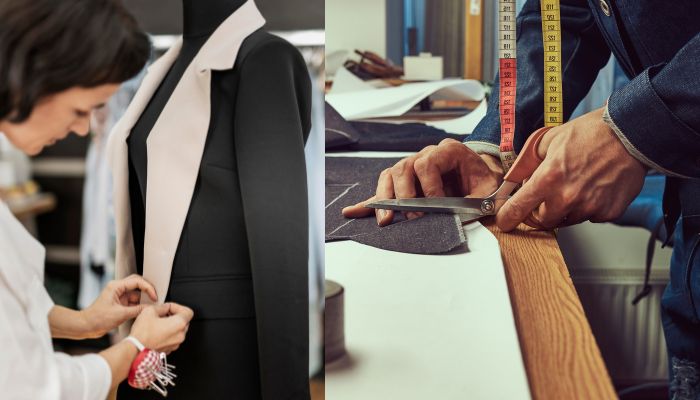
As per the shape around the pattern, the die is made with a metal strip. Forged die or steel strip is used as the metal strip. One end of this strip is sharpened and on the other end, a tie bar is set. Pressure is exerted with the help of ram head, placing the die on the block of fabric lay. The sharp end of the bar, as a result, goes inside the fabric lay cutting the fabric. The pattern of the exact dimension is cut from the fabric lay as per the shape of the die in this way.
Die-cutting is a great and widely used technique for very accurate and ideal cutting of small parts. The cutting blade and die need to be accurate, the die, cutting blade, fabric lay, and the ram surface are to be controlled in parallel conditions and pressure has to be exerted as per the requirements for achieving good cutting in this method. The die blade may be damaged if the pressure is high and the cutting may not be properly done if the pressure is low. A gap of 2 to 4mm is kept from one die to the other during the setting of the die on the fabric lay.
This particular method takes less time in comparison to the time it takes to make the die.
With a clear idea about the pros and cons of this famed method, make your decision based on your business needs and requirements.